
Plant SOS · Care
When and how to fertilize
your indoor plants?
Fertilizing your indoor plants is like feeding them — but with a method. A substrate, no matter how good, gradually becomes depleted of nutrients through watering and growth. Without a regular supply of fertilizer during the active season, your plants will survive but not thrive: pale leaves, slow growth, sparse foliage. Fertilization is the most direct lever to transform a plant that "holds on" into a plant that truly grows.
In this guide, we explain when to fertilize, what type of fertilizer to choose, and how to dose according to your plant.

Understanding the 3 essential nutrients — N-P-K
All fertilizers are formulated around three major elements. Understanding their role allows you to choose the right product based on what you want to achieve.
Stimulates leaf growth and green color. Essential for plants with dense foliage. To be favored in spring and summer.
Promotes root development and flowering. Important for flowering plants and during repotting.
Strengthens the plant's natural defenses, improves disease resistance, and supports overall metabolism.
"No fertilizer in winter.
Resting plants don't know what to do with it."
When to fertilize — the calendar
The most important rule of fertilization is also the simplest: fertilize during growth, never during rest. A plant in winter dormancy cannot absorb nutrients — the fertilizer accumulates in the substrate, burns the roots, and serves no purpose.
Gradual resumption · Start fertilizing every 3 weeks
Active growth · Fertilize every 2 weeks
Slowing down · Gradual stop in October
Complete rest · No fertilization
The 4 types of fertilizers
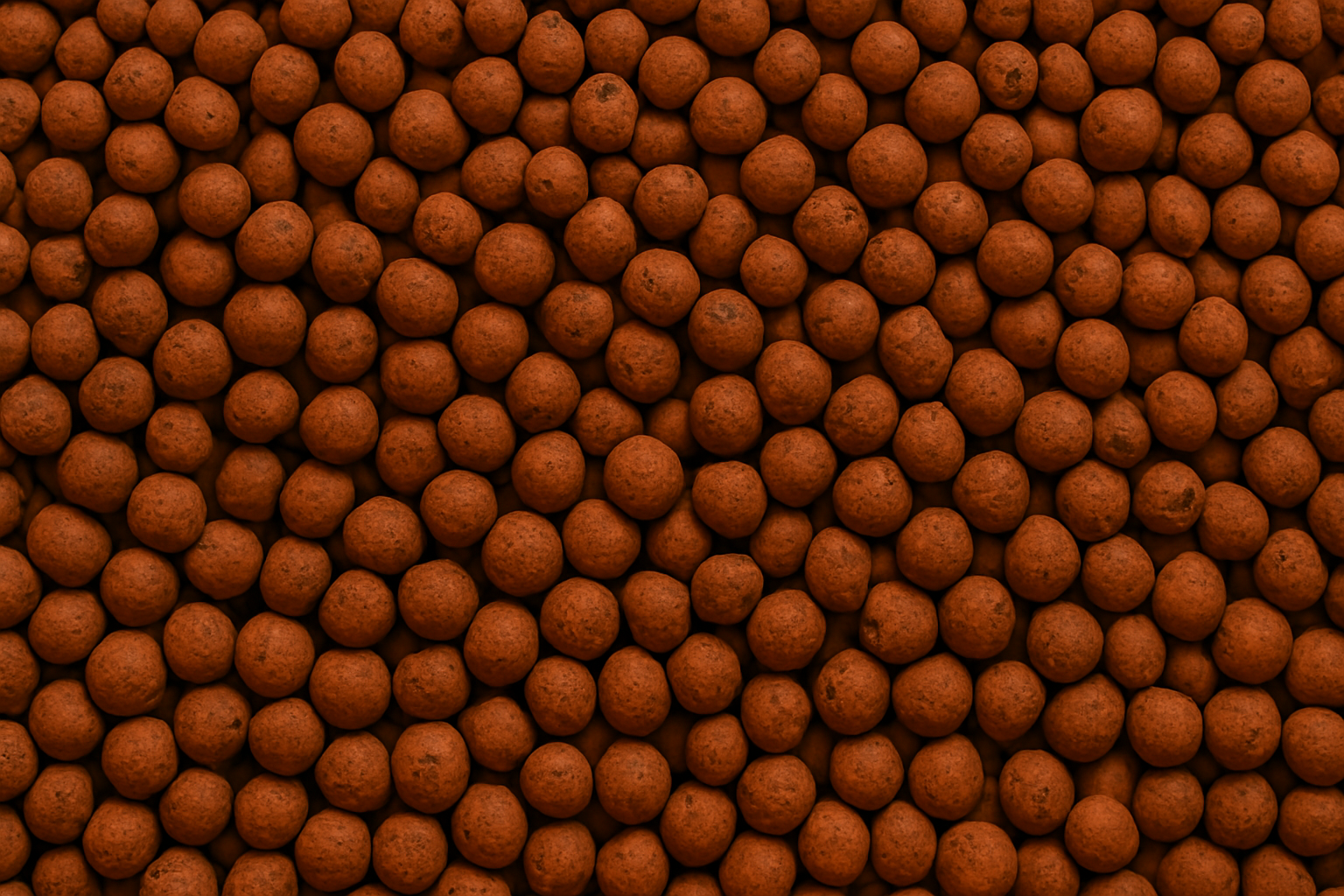
Concentrated liquid fertilizer
Ideal for: all actively growing plants, quick results
This is the most common and flexible format. A few milliliters are diluted in watering water, allowing precise dosage control and easy adjustment according to the plant and season. Results are visible in 1 to 2 weeks.
Slow-release capsules
Ideal for: beginners, everyday indoor plants, maximum convenience
The capsules are inserted directly into the substrate and gradually release nutrients with each watering, over 2 to 3 months. The simplest solution — place the capsules once and forget about them for the entire growing season.
Vermicompost — natural amendment
Ideal for: enriching the substrate long-term, natural and organic approach
Vermicompost is not a chemical fertilizer but an organic amendment that improves the biological life of the soil. It releases nutrients slowly and improves the substrate's structure over the long term. To be incorporated into the potting mix when repotting or as a thin layer on the surface every 2-3 months.
Specific fertilizers (tropical, orchid, cactus, etc.)
Ideal for: plants with specific needs, optimizing foliage or flowering
Specialized fertilizers are formulated with N-P-K ratios adapted to specific plant families. A tropical plant fertilizer is rich in nitrogen to maximize foliage. An orchid fertilizer is rich in phosphorus to promote flowering. To be used when you want to go beyond basic fertilization.
Table — which fertilizer for which plant?
| Plant | Recommended fertilizer | Frequency | Particularity |
|---|---|---|---|
| Monstera, Pothos, Philodendron | Tropical or universal fertilizer | Every 2 weeks (March-August) | Rich in nitrogen for dense foliage |
| Ficus, Dracaena, Schefflera | Universal fertilizer | Every 3 weeks | Sensitive to over-fertilization — dose lightly |
| Calathea, Fern | Universal fertilizer diluted by half | Once a month | Very sensitive — always under-dose |
| Orchid | Special orchid fertilizer | Every 2 weeks during growth | Rich in phosphorus for flowering |
| Cactus & Succulents | Cactus fertilizer or diluted universal fertilizer | Once a month (June-August) | Very little in summer, none in winter |
| Aloe vera | Very diluted universal fertilizer | 2-3 times a year | Needs very little — less is more |
| Zamioculcas, Sansevieria | Universal fertilizer | Once a month (April-August) | Resistant plants — modest fertilization |
| Alocasia, Caladium | Tropical fertilizer | Every 2 weeks | Rapid growth — high appetite |
How to dose without burning the roots
Overdosing is the most common and most serious mistake with fertilizers. Roots burned by excess fertilizer take weeks to recover.

Mistakes to avoid
❌ Fertilizing in winter
The plant is at rest, its roots absorb almost nothing. The fertilizer accumulates in the substrate, increases salinity, and eventually burns the roots. Stop all fertilization from October to February.
❌ Fertilizing a stressed or sick plant
A plant that has too much water, has just been repotted, or is fighting an infestation does not need fertilizer — it needs to recover. Wait until it is healthy before fertilizing. Fertilizer does not cure, it amplifies — for better or worse.
❌ Doubling the dose to "catch up" on a delay
If you've missed one or two fertilizations, simply resume at the normal pace — do not double the dose to compensate. A temporary excess is much more dangerous than forgetting.
🌿 Our fertilizers & amendments
For plants that truly thrive
These guides might also help you
Douceur Maison · Shop
All our fertilizers
& amendments
Selected to nourish your plants naturally and sustainably, throughout the season.
View collection🌿 Unsure about your plant?
Even if several symptoms look similar,
their origin can be very different.
Answer a few questions and find the most likely cause.
Free • Less than a minute • No registration required
Start diagnostic🌿 Guide written by the Douceur Maison Plant SOS team.
We write practical guides to help enthusiasts care for their indoor plants. · sosplantes@douceurmaison.fr
0 comments